
Physiotherapy qualification recognition in Europe is governed by Article 11 of Directive 2005/36/EC. This article establishes a five-tier classification system that determines where a physiotherapy degree from one EU country is accepted in another. As a result, understanding your Article 11 level is the essential first step before planning any cross-border career move in physiotherapy across Europe.

Physiotherapy Qualification Recognition in Europe: How Article 11 Works
When a physiotherapist moves from one EU Member State to another, the host country compares the applicant’s qualification level against its own national requirement. However, this comparison follows a standardised scale defined by Article 11. Consequently, both the applicant and the host authority share a common reference point. Furthermore, Article 11 works together with Article 13 (general recognition system) and Article 14 (compensatory measures), which together define what happens when a qualification gap exists between two countries.
The Five Article 11 Qualification Levels
Article 11 divides professional qualifications into five levels. For physiotherapy specifically, only levels (c), (d) and (e) are relevant across EU and EEA countries. No country requires only level (a) or (b) for physiotherapy practice.
| Level | Qualification Type | Duration | Recognition from level below |
|---|---|---|---|
| Level (e) | Master’s degree or post-graduate — university | More than 4 years total | ⚠ Accepted — compensatory measures likely |
| Level (d) | Bachelor’s degree — university or higher education | 3 to 4 years | ⚠ Accepted — compensatory measures likely |
| Level (c) | Post-secondary / short-cycle vocational training | Minimum 1 year | ✗ May be refused — two-level gap to (e) |
| Level (b) | Secondary education certificate | Variable | Not applicable for physiotherapy |
| Level (a) | Attestation of competence | Variable | Not applicable for physiotherapy |
What Are Compensatory Measures in Physiotherapy Recognition?
When a one-level gap exists between your qualification and the host country’s requirement, the host country cannot refuse your application. Instead, it must offer a choice between two compensatory measures under Article 14:
- Aptitude test: A formal examination covering areas where the two national training systems differ significantly.
- Adaptation period: A supervised period of professional practice in the host country, typically up to three years.
In most cases, the applicant has the right to choose between the two. Furthermore, even when no level gap exists, the host country may still require registration with a professional body or proof of language proficiency. In other words, Article 11 compatibility is necessary but not always sufficient on its own for physiotherapy qualification recognition in Europe. For more details on the recognition process, visit our guide on the European Professional Card for physiotherapists.
Where Can You Practise? Physiotherapy Qualification Recognition by Article 11 Level
Under Article 11 of Directive 2005/36/EC, every physiotherapy qualification in the EU and EEA is mapped to one of five levels. The key principle for professional recognition in Europe is simple: a qualification is accepted when it matches or exceeds the level required by the host country. This means your level determines where you can move and practise — not the other way around. The table below flips the usual perspective: find your home qualification level, see which countries sit at that level, and check which destinations you can access.
| Your qualification level | Description | Countries at this level | Where you can apply |
|---|---|---|---|
| Level (e) | Master’s degree EQF 7 — 300 ECTS |
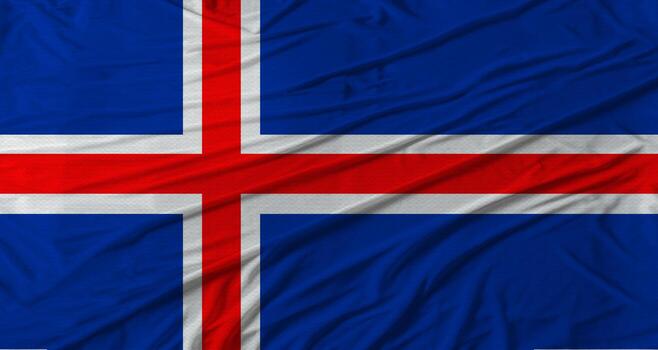
Belgium Cyprus France Iceland Luxembourg Poland |
✓ Guaranteed admission to level (e), (d) and (c) countries A master’s qualification meets or exceeds every host country’s requirement. |
| Level (d) | Bachelor’s degree EQF 6 — 180–240 ECTS |
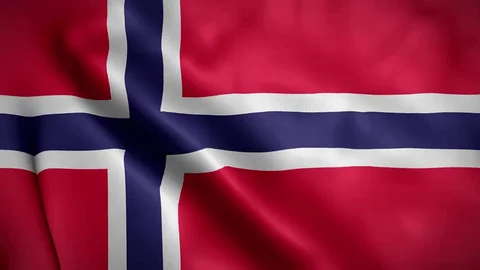
Austria Bulgaria Croatia Czechia Denmark Estonia Finland Greece Hungary Ireland Italy Latvia Lithuania Malta Netherlands Portugal Romania Slovenia Spain Sweden Norway |
✓ Guaranteed admmission to level (d) and (c) countries ⚠ Conditional access to level (e) countries Compensatory measures under Article 14 may apply for master-level destinations. |
| Level (c) | Vocational / post-secondary training Dual-track systems where vocational is the legal minimum, academic route at level (d) also exists |
Germany Slovakia |
✓ Guaranteed admission to level (c) countries ⚠ Conditional access to level (d) countries ✗ Likely refused at level (e) countries A two-level gap (c → e) generally falls outside recognition. |
How the “level up / level down” rule works
The recognition system reads your qualification from the professional’s point of view. Moving downwards — applying to a country that asks for a lower level than you hold — is always accepted, because a higher qualification covers a lower requirement. Moving upwards by one level triggers compensatory measures (an aptitude test or an adaptation period). A gap of two levels or more is generally outside the scope of automatic recognition, which is exactly the barrier a Common Training Framework is designed to remove.
Next step: check your country guide
Each EU/EEA country has been placed in its Article 11 category so you can see, at a glance, both where your qualification stands and which destinations are open to you. Explore the individual country guides to confirm your level and plan your move across Europe.
How to Use This Guide for Physiotherapy Qualification Recognition in Europe
To use this information effectively, first identify the Article 11 level of your physiotherapy degree using the country table above. Then, locate your target country and check its level. If you are at level (d) — the standard bachelor’s degree — you can consequently apply in the large majority of European countries without a level gap. Moreover, if you are moving to a level (e) country such as France or Belgium, your application will be accepted but compensatory measures may follow. In contrast, a level (c) qualification moving to a level (e) country faces a two-level gap, which may lead to refusal.
Finally, it is worth noting that physiotherapy is not yet covered by the automatic recognition system, which currently applies only to doctors, nurses, dentists, pharmacists, midwives, veterinary surgeons and architects. However, the European Commission is actively exploring a Common Training Framework (CTF) for physiotherapists, which could in the future lead to automatic recognition across participating Member States. For more on this topic, visit our dedicated country guides or read about the future of physiotherapy recognition in Europe.