
Physiotherapy Degree in Italy: Study Path and Career Opportunities
Physiotherapy plays a central role in prevention, treatment and motor rehabilitation. Physiotherapists help patients regain mobility and improve quality of life for those dealing with injuries, surgery outcomes or chronic conditions.
In Italy, the bachelor’s degree in physiotherapy follows European Union standards, based on the European Qualifications Framework and expressed in ECTS credits. As a result, the qualification obtained allows graduates to work in Italy and, subject to the professional recognition and registration requirements of the destination country, to pursue career opportunities elsewhere in Europe.

Admission Requirements and Entrance Exam
To enrol, a high school diploma is required. A scientific background is an advantage, as it facilitates the study of key subjects such as anatomy and biology.
Access to physiotherapy courses in Italy is granted through a restricted-entry admissions test. The exam typically assesses preparation in biology, chemistry, physics and logic, allowing universities to select the most suitable candidates for a limited number of places.

Course Structure and Clinical Internship
The bachelor’s degree programme combines theoretical education with practical field training. The curriculum includes biomechanics and kinesiology, kinesitherapy and exercise-based interventions, and general pathology.
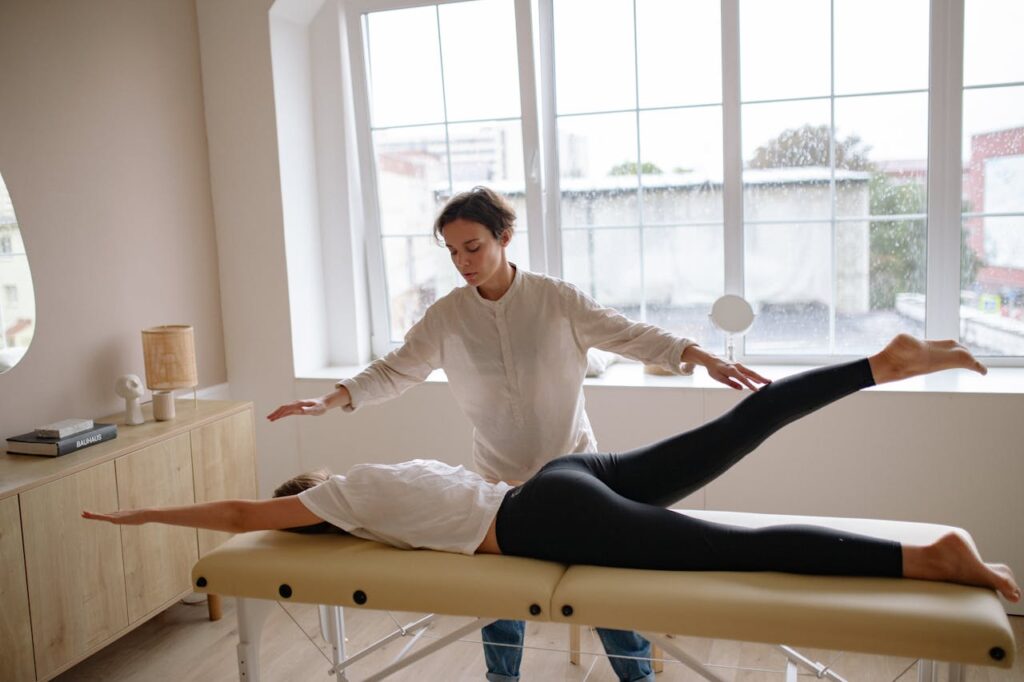
In addition, the mandatory clinical internship takes place in hospitals and accredited facilities. During these hours, students work under the direct supervision of experienced professionals, applying manual therapy and rehabilitation techniques to real patients.
Regulations and Registration with the Professional Board
The training path is regulated by the Ministry of Health, which ensures a consistent quality of teaching across the national territory.
To practise the profession, graduates must register with FNOFI (National Federation of Orders of Physiotherapists). Registration with the professional board is therefore an essential legal requirement, in line with the recognition principles described in our Article 11 recognition guide.
Career Opportunities and Alternatives Abroad
Demand for physiotherapists is constantly growing in Italy, as an ageing population increasingly requires rehabilitation treatments.
Graduates can work in public or private facilities. Career opportunities include:
- Hospitals and Rehabilitation Centres: treatment of post-surgical patients and neurological rehabilitation.
- Sports Clubs: injury prevention and treatment for athletes, as part of sports physiotherapy.
- Private Practice: independent management of a private clinic.
Finally, many Italian students choose Slovenia for their education, where physiotherapy degree programmes taught in Italian represent a flexible and accessible alternative for students planning a career in physiotherapy.
Where Can You Practice with an Italian Physiotherapy Degree?
Under Article 11 of Directive 2005/36/EC, the Italian physiotherapy degree qualifies as Level (d) — a university bachelor’s degree of three years. As a result, this determines which EU/EEA countries accept the qualification. Furthermore, it clarifies where compensatory measures under Article 14 may additionally apply. In other words, acceptance is guaranteed at the same level, however each host country may still impose additional requirements. For the full recognition procedure, see our Article 11 recognition guide.
Article 11 Recognition Table — Italy
| Article 11 Level | Description | Countries requiring this level | Recognition from Italy (d) |
|---|---|---|---|
| Level (e) | Master’s degree or post-graduate — university, more than 4 years | Belgium Cyprus France Iceland Luxembourg Poland EQF 7 — master’s degree required as minimum entry level | ⚠ Accepted — compensatory measures likely One level below host country requirement. Host may request an aptitude test or adaptation period under Art. 14. |
| Level (d) ← Italy | Bachelor’s degree — university or higher education, 3–4 years | Austria Bulgaria Croatia Czechia Denmark Estonia Finland Greece Hungary Ireland Italy Latvia Lithuania Malta Netherlands Portugal Romania Slovenia Spain Sweden Norway EQF 6 — bachelor’s degree, 180–240 ECTS | ✓ Accepted Same level — qualification accepted. Individual compensatory measures may still apply per host country rules. |
| Level (c) | Post-secondary / short-cycle vocational training (min. 1 year) | Germany Slovakia Dual-track systems: vocational route is the legal minimum; academic route also exists at level (d) | ✓ Accepted Italian level (d) exceeds the minimum. Individual assessment by the competent authority may apply due to the dual-track system. |
| Level (b) | Secondary education certificate or vocational training | No EU/EEA country requires only level (b) for physiotherapy | ✓ Accepted Not applicable for physiotherapy in the EU/EEA. |
| Level (a) | Attestation of competence — basic training or general education | No EU/EEA country requires only level (a) for physiotherapy | ✓ Accepted Not applicable for physiotherapy in the EU/EEA. |