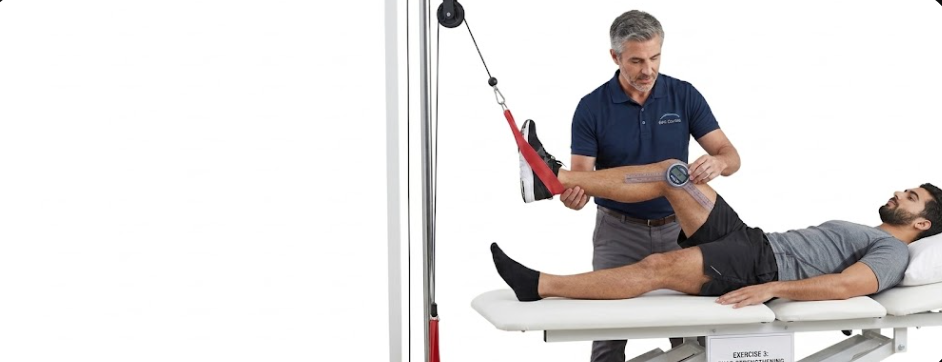
Rehabilitation in physiotherapy degree programs is one of the core interventional subjects that prepares graduates to restore function, mobility and independence in patients recovering from injury, surgery, illness or disability. As a subject, rehabilitation sits at the heart of clinical training in nearly every physiotherapy degree offered in Europe, tying together assessment, intervention and long-term functional recovery. According to the European Commission’s mapping of physiotherapy education, rehabilitation appears in the minimum entry-level curriculum of 27 out of 28 surveyed countries — with Slovakia as the only exception.
Where Rehabilitation Is Taught Within Physiotherapy Degrees Across Europe
Rehabilitation as a subject appears in nearly every European physiotherapy curriculum, making it one of the most consistently shared interventional skills taught within physiotherapy degree programs across Europe. However, the depth, credit allocation and clinical integration of this rehabilitation component still vary from country to country.
- Slovakia: The only surveyed country whose physiotherapy degree does not include rehabilitation as a distinct interventional skill subject. However, functional recovery principles are typically embedded within broader clinical modules such as orthopaedics and neurology.
- Italy: The three-year Laurea Triennale (180 ECTS) integrates rehabilitation training within the interventional skills block, closely connected to musculoskeletal sciences and neurological physiotherapy. Clinical placements apply rehabilitation principles from the second year onward.
- Ireland: Within 240 ECTS programs, rehabilitation connects closely with clinical assessment and long-term patient management. Students apply this training during over 1,000 hours of supervised clinical education.
- Latvia and Czech Republic: These 180 ECTS programs deliver rehabilitation content alongside pathokinesiology and clinical sciences. Together, they build a coherent functional recovery curriculum across the second and third years.
- France, Belgium and Poland: At master’s level (300 ECTS), rehabilitation training reaches greater analytical depth. Programs cover complex case management, interdisciplinary rehabilitation planning and outcome measurement at an advanced level.
What Rehabilitation Training Covers in a Physiotherapy Degree
This subject builds on musculoskeletal sciences and connects closely with exercise therapy. Overall, most European programs cover the following core areas:
- Principles of functional recovery and re-education
- Rehabilitation planning for musculoskeletal, neurological and cardiorespiratory conditions
- Monitoring and evaluating rehabilitation outcomes
- Adapting rehabilitation plans to different population groups
- Interdisciplinary and multi-professional rehabilitation practice
Clinical Placements and Competence in Rehabilitation
Functional recovery underpins nearly every area of physiotherapy practice, from post-surgical care to long-term management of chronic conditions. Therefore, competence in this area carries substantial weight in the rehabilitation component of physiotherapy degree programs across EU/EEA countries. The vast majority of surveyed countries require graduates to independently monitor and evaluate physiotherapy intervention outcomes, making necessary modifications throughout the recovery process. In addition, this competence works alongside skills already covered under musculoskeletal sciences and pain medicine, since long-term recovery frequently requires both functional progression and pain management strategies.
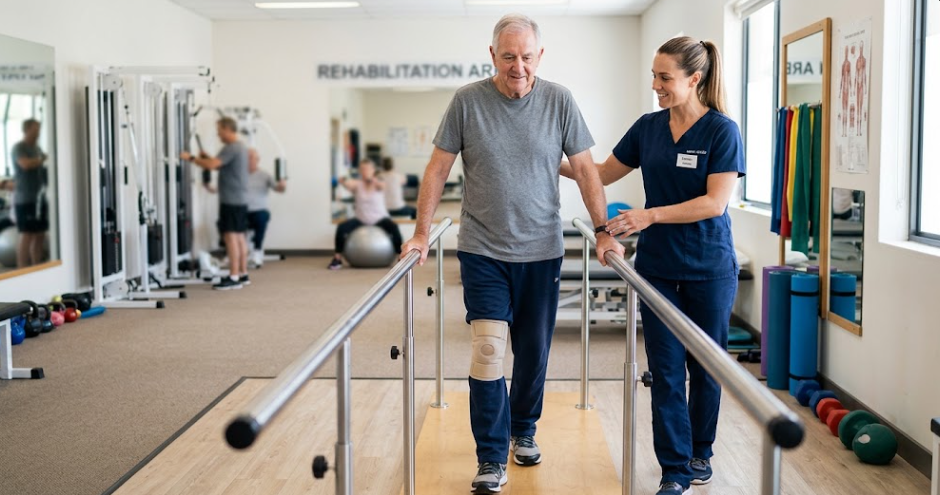
Countries Where This Subject Is Included in the Physiotherapy Curriculum
Rehabilitation forms part of the minimum entry-level curriculum in every surveyed country except Slovakia.
If you are exploring where to study, browse our country guides to compare access requirements, ECTS credits and clinical placement structures for each physiotherapy degree program in Europe.